Project Description
Client: Ephorate of Antiquities of Thessaloniki City, Hellenic Ministry of Culture
Structural Assessment: Penelis Consulting Engineers S.A.
Study Team: Prof. Em. George G. Penelis, Dr Gregory G. Penelis, Dr Konstantinos Paschalidis
Programme: Maturation studies for the enhancement of eight UNESCO monuments of Thessaloniki
Study: Preliminary assessment study, December 2021 (approved May 2022); evaluation of in-situ tests, July 2024
Location: Thessaloniki, Greece
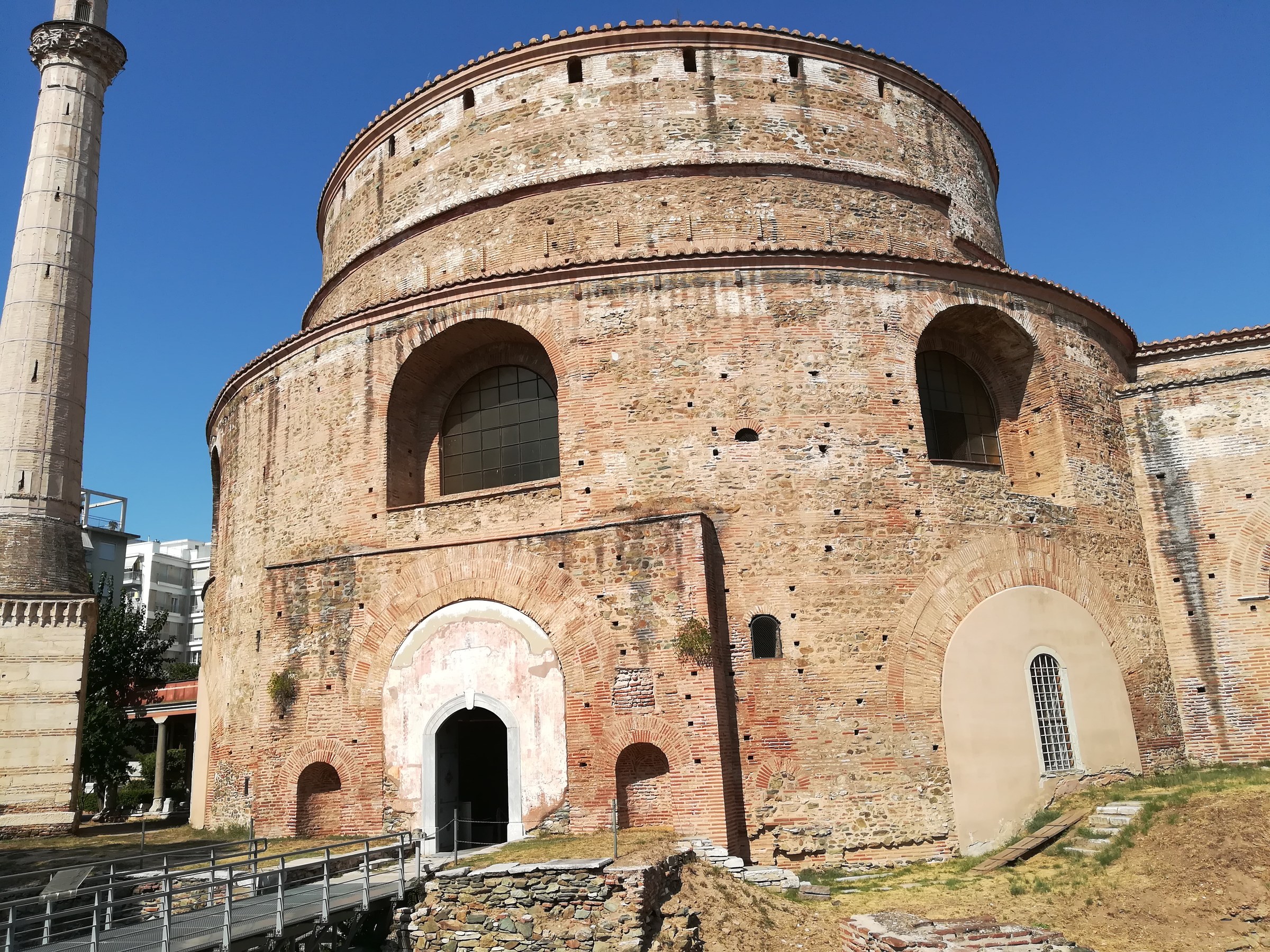
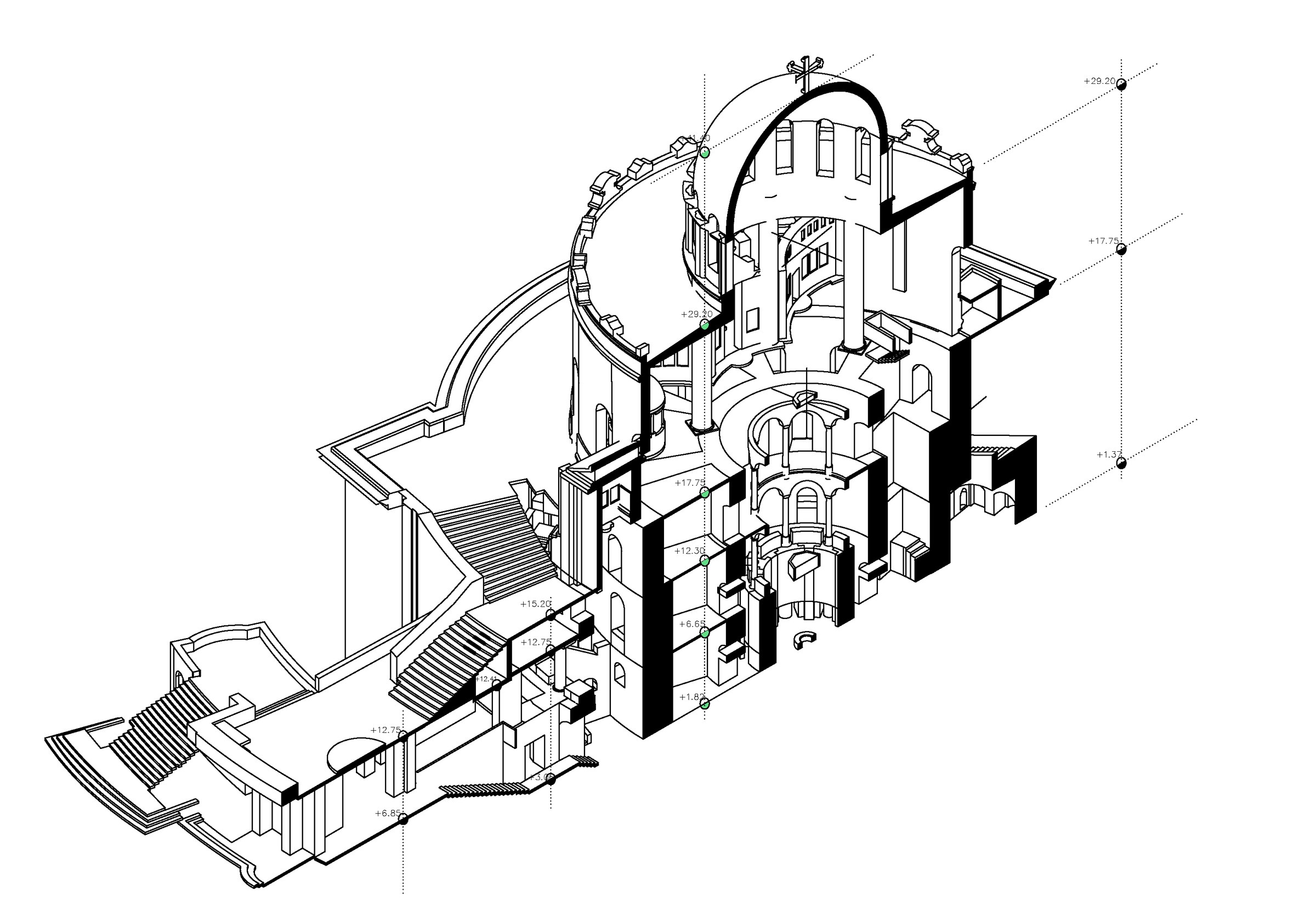
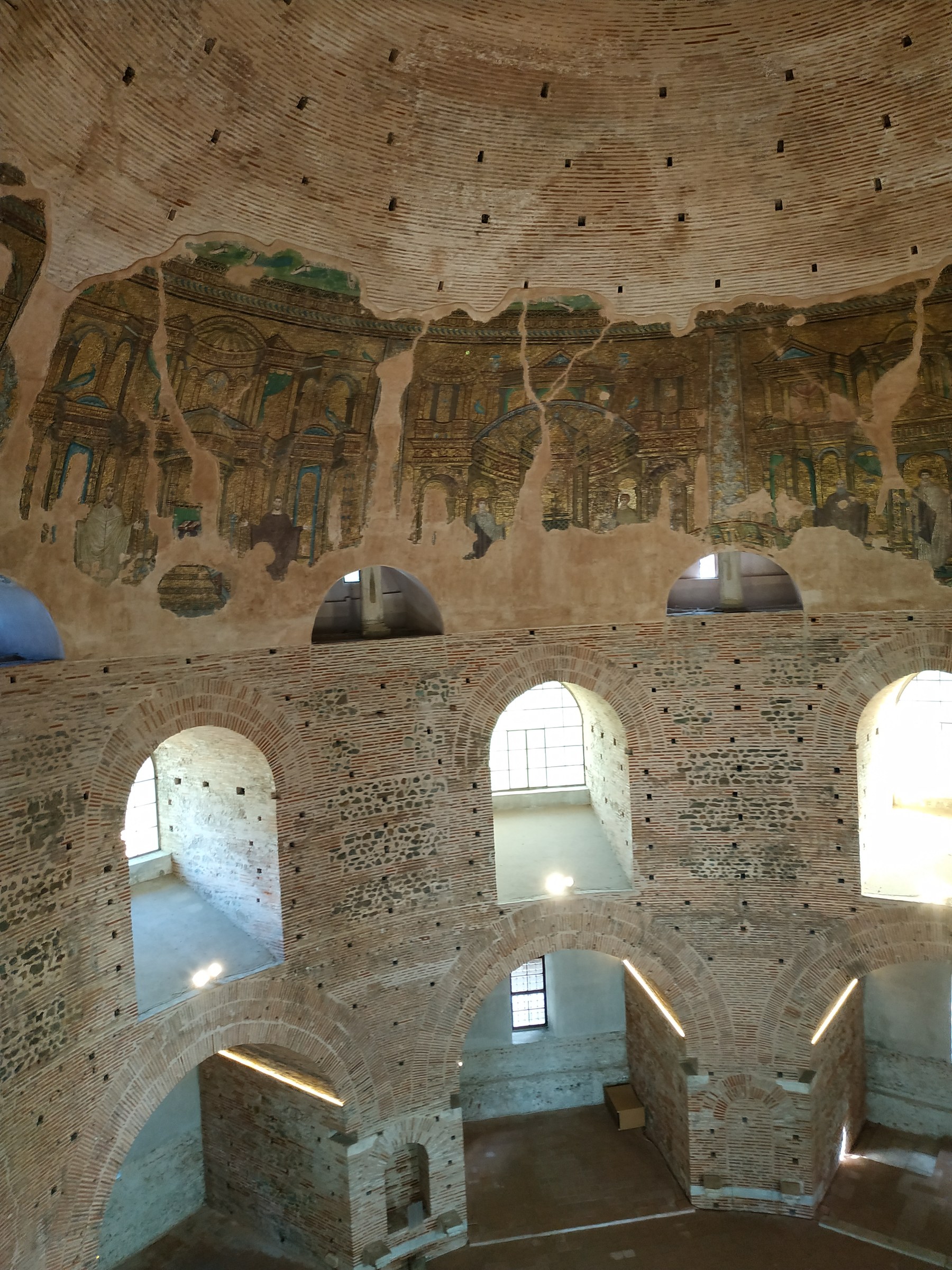
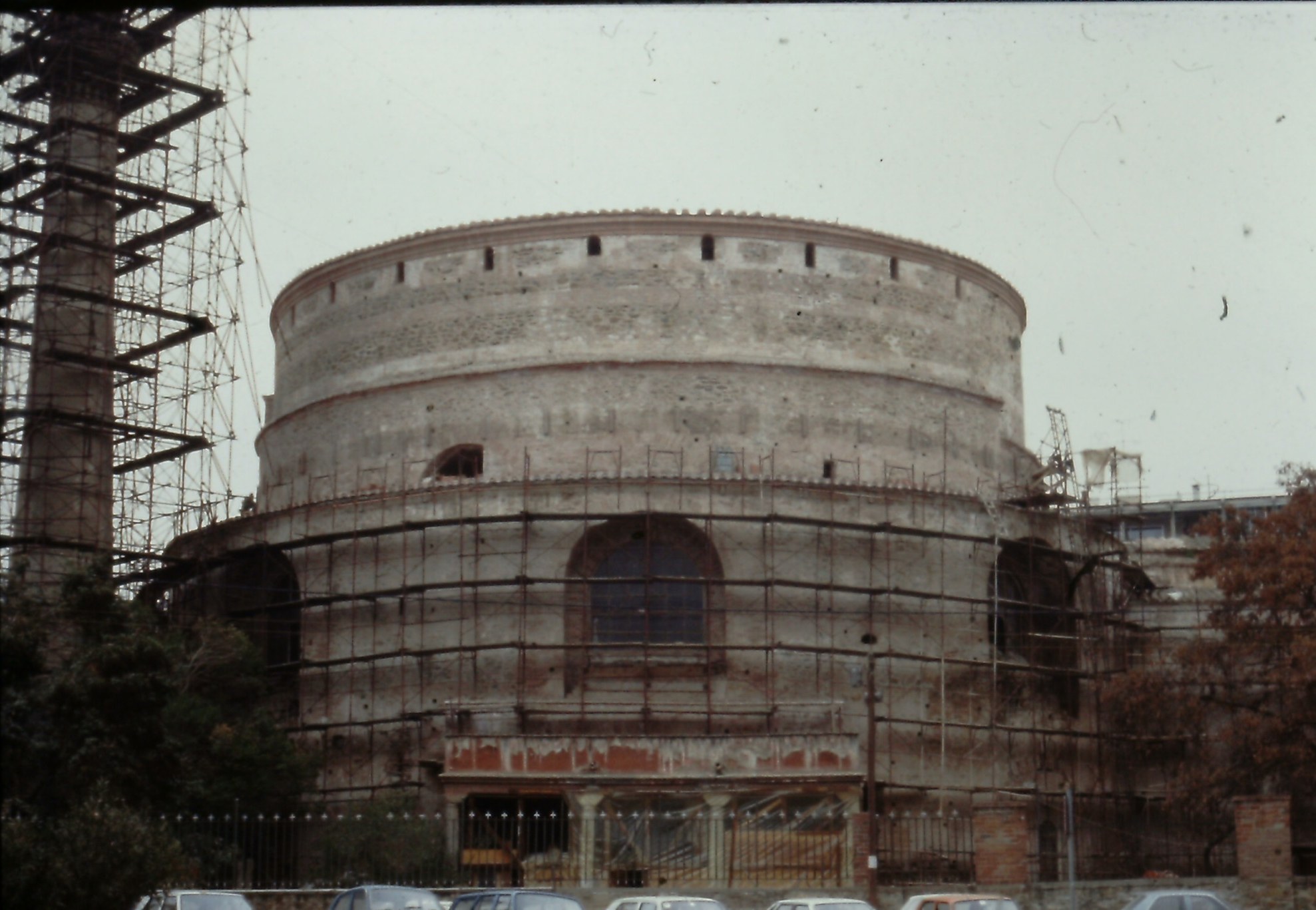
The Rotunda of Thessaloniki, built around 300 AD as part of the palace complex of Emperor Galerius, is one of the most imposing late-Roman monuments in the Eastern Mediterranean and, with the Pantheon in Rome, a rare surviving example of a great Roman domed rotunda. Its cylindrical brick-and-rubble masonry drum, 6.05 m thick and opened by eight deep niches, carries a brick dome of 24.5 m internal diameter rising to 28.4 m above the floor. The building was converted into a church around 400 AD, with the addition of a vaulted chancel and apse, and into a mosque in the Ottoman period; it is part of the Paleochristian and Byzantine Monuments of Thessaloniki World Heritage property.
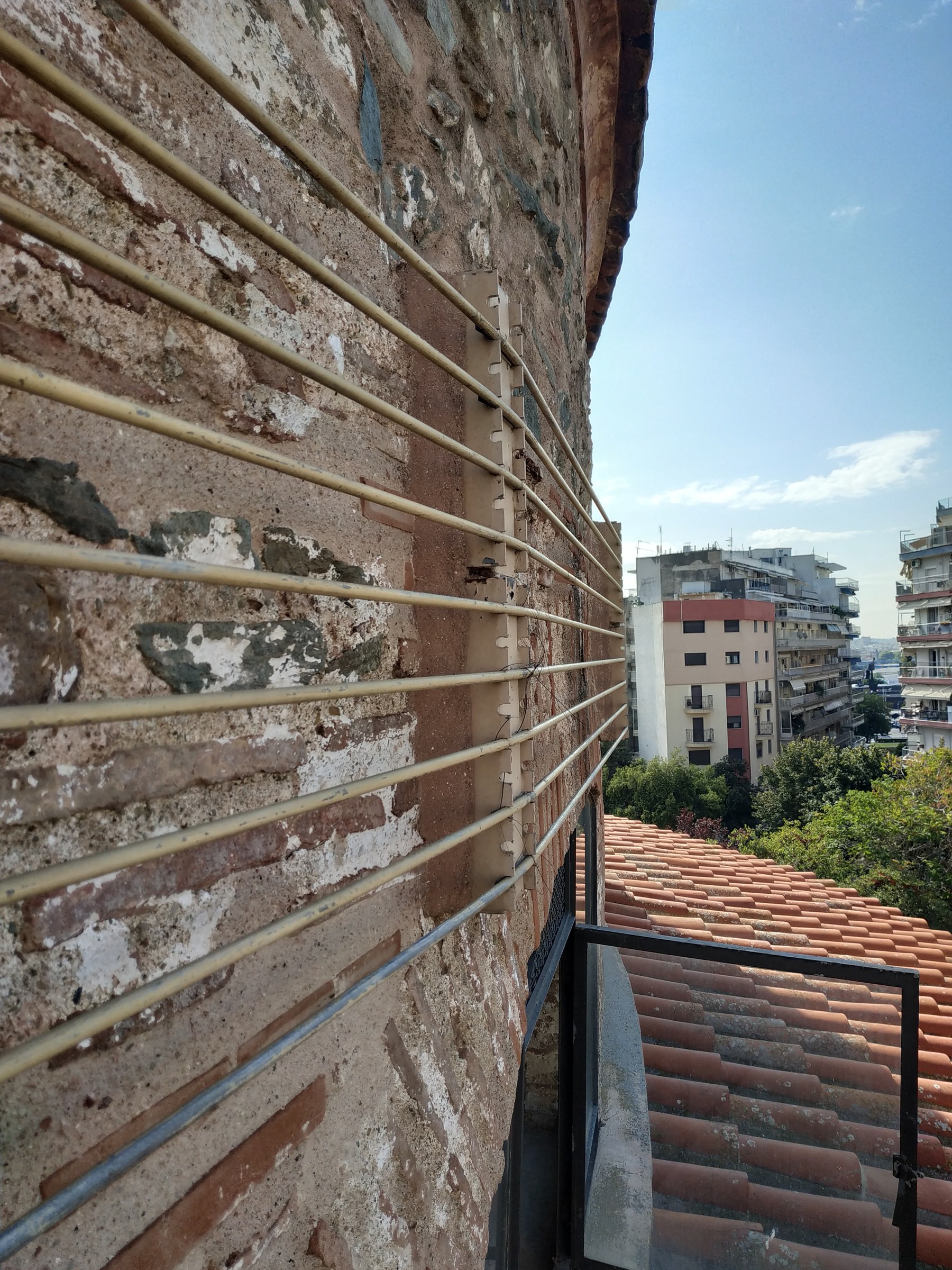
The 1978 Thessaloniki earthquake (M 6.6) left the monument near collapse, with wide shear-compression cracks in the southern piers P2 and P3, meridian cracks at the base of the dome and outward leaning of the piers. The structural assessment and rehabilitation designed in 1980 by Prof. George Penelis and his team at the Aristotle University of Thessaloniki included extensive grouting with pozzolanic grouts, prestressed stainless-steel rings around the drum, prestressed stitching of piers P2 and P3 and steel cages in their spiral staircases, with prestressed ties and half-rings in the Christian chancel.
Forty years later, after small cracks (1–3 mm) appeared on pier P3, the Ephorate of Antiquities of Thessaloniki City commissioned Penelis Consulting Engineers to re-assess the load-bearing structure in its as-built condition. The 2021 study included:
- As-built survey and pathology of the 1980s interventions, including mapping of the new cracks on pier P3 and at the dome base.
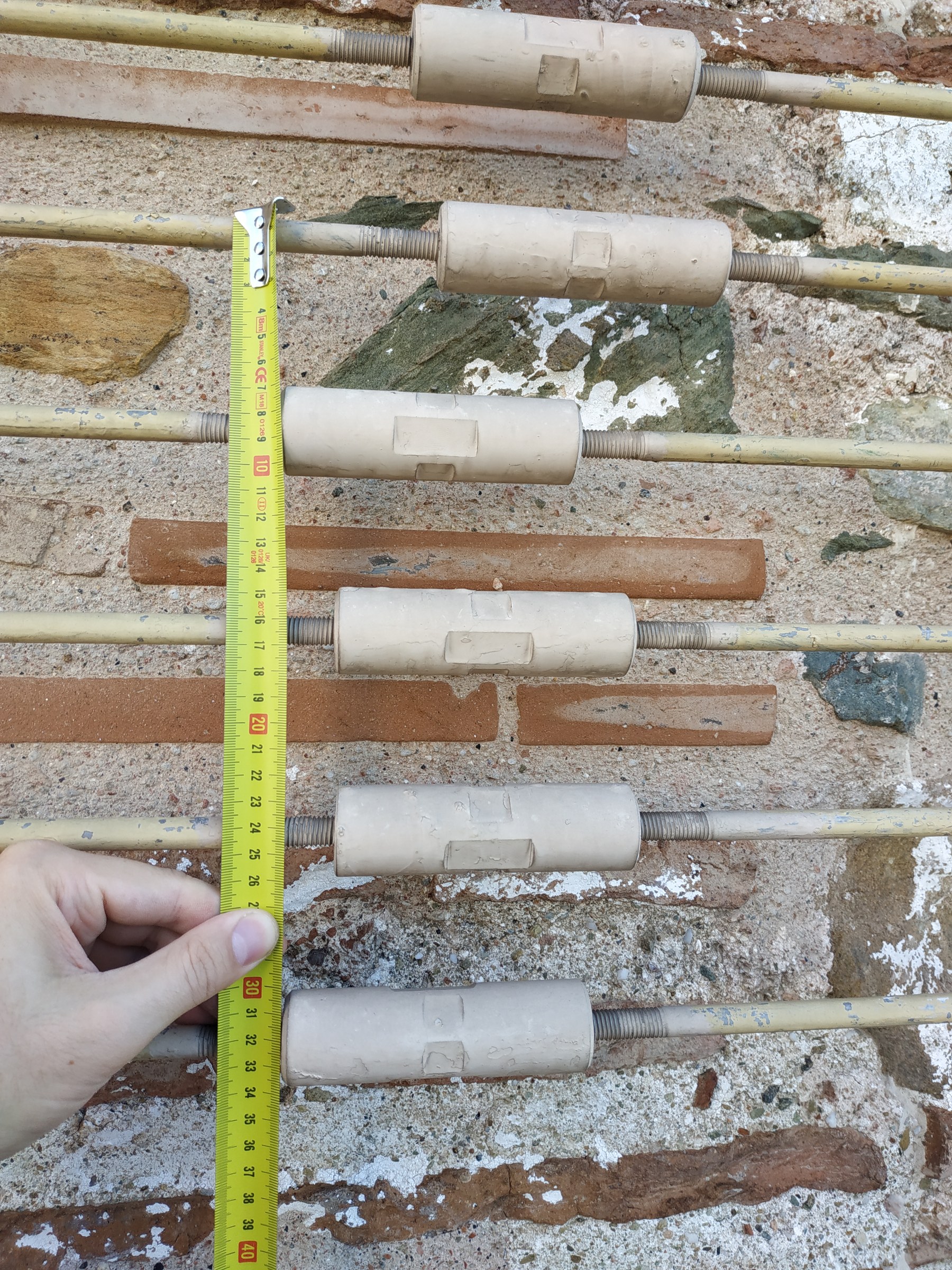
- In-situ crossbow tests on the external ring tendons to measure the remaining prestress.
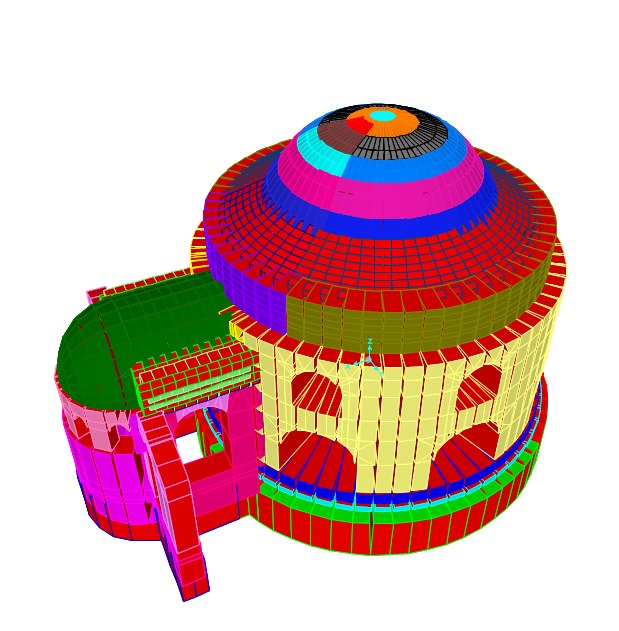
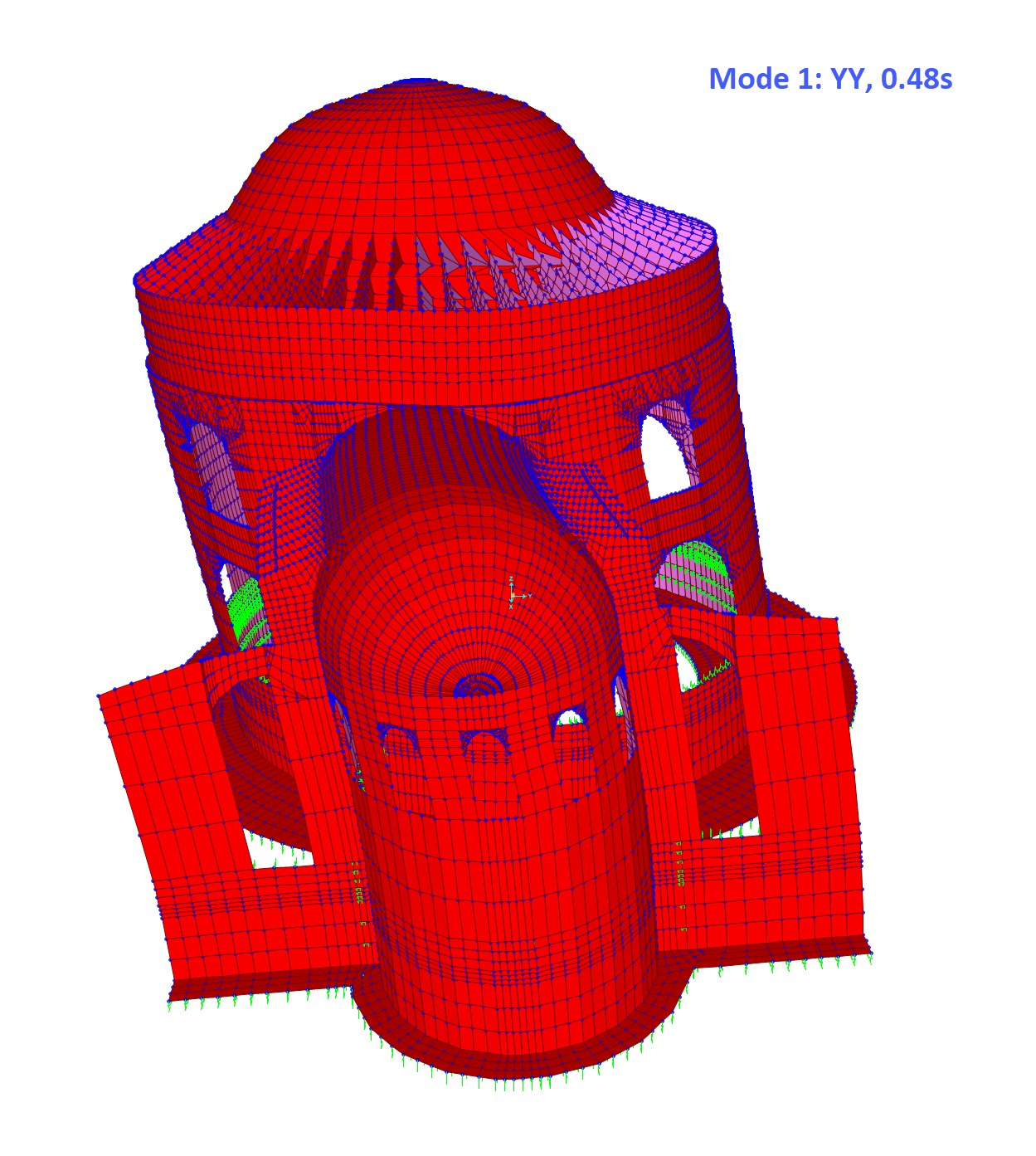
- Modal response-spectrum analysis of a single SAP2000 shell finite-element model of the Roman and Christian phases, for uncracked and cracked masonry rings, against EN 1998-1 and the Greek National Annex.
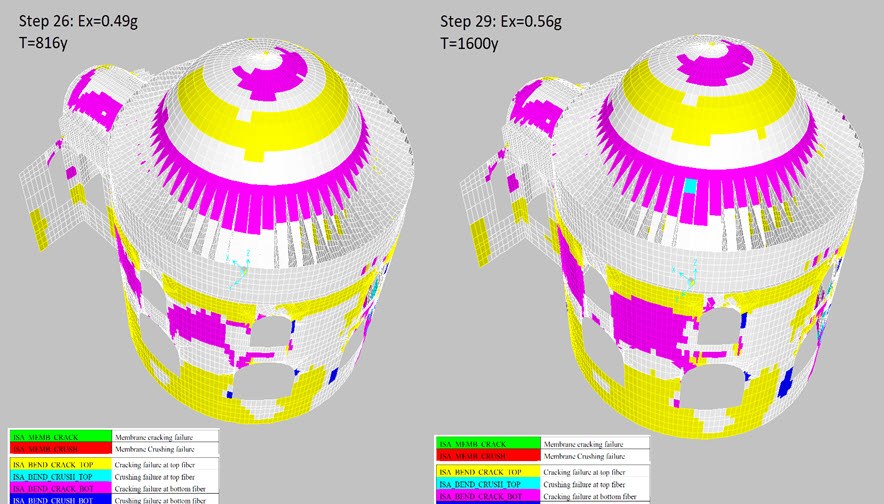
- Static non-linear (pushover) analysis with the step-by-step cracking procedure developed by the Penelis team, for seismic return periods of 816 and 1,600 years.
The study confirmed that the 1980 intervention was highly successful: the monument meets the requirements of EN 1998-1 for the design earthquake, the pushover capacity curve lies within the upper- and lower-bound limit-analysis envelope used in 1980, and the new cracks on pier P3 are local, attributed mainly to shrinkage of the reconstruction material. Local grouting and stitching of P3 and the dome-base crack, repainting of the exposed steelwork and a programme of compliance tests were proposed.
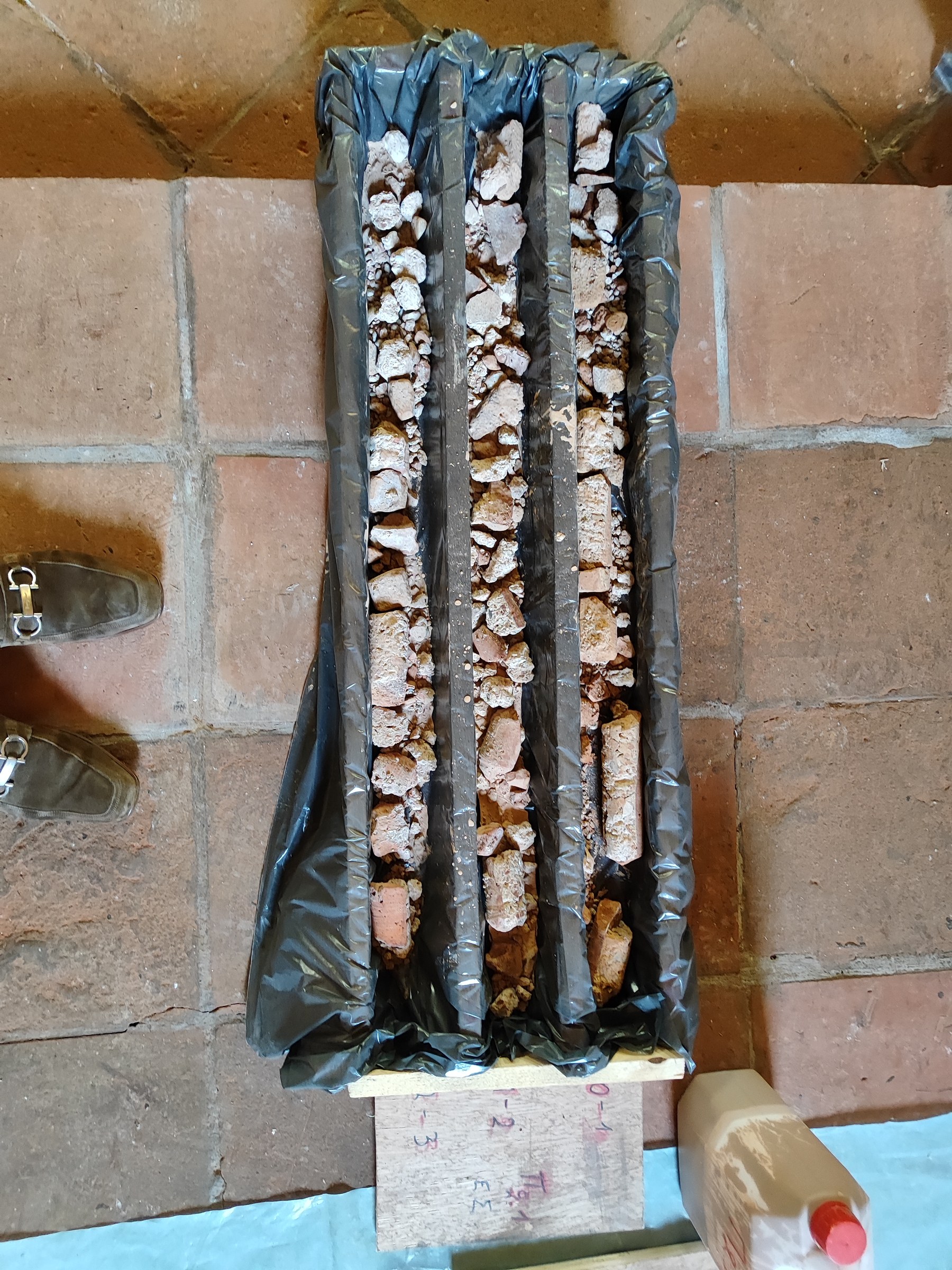
The tests carried out by the Ephorate in 2022–2024 (crossbow tests, ambient-vibration measurements, endoscopies and laboratory tests on cores) were evaluated by Penelis in 2024. They showed prestress losses of only 0–4 % in the Roman-phase rings, measured natural periods in close agreement with the analysis, and good grout fill except in the heavily damaged piers P2 and P3, for which preventive mass grouting up to the springing of the arches was recommended.
The monument and its 1980 rehabilitation
After the 1978 earthquake the Rotunda was shored and rehabilitated (1981–1986) to the design of Prof. George Penelis and his AUTh team, with grouting, prestressed stainless-steel rings and stitching of the most damaged piers.
2021 seismic assessment
The whole monument was modelled with shell finite elements for modal response-spectrum analysis and for step-by-step non-linear (pushover) analysis with progressive cracking.
Verification of the 1980s interventions
The retained prestress of the ring tendons, the grout fill of the piers and the dynamic properties of the monument were checked on site and in the laboratory, and evaluated by Penelis in 2024.