Project Description
Client / Sponsor: Athanasios and Marina Martinos Foundation
Original Architect: Ermetes Pierotis (1847–1856)
Restoration Study & Project Management (PMO & PMC): Penelis Consulting Engineers S.A.
Contractor: ROWAD Modern Engineering
Location: Alexandria, Egypt
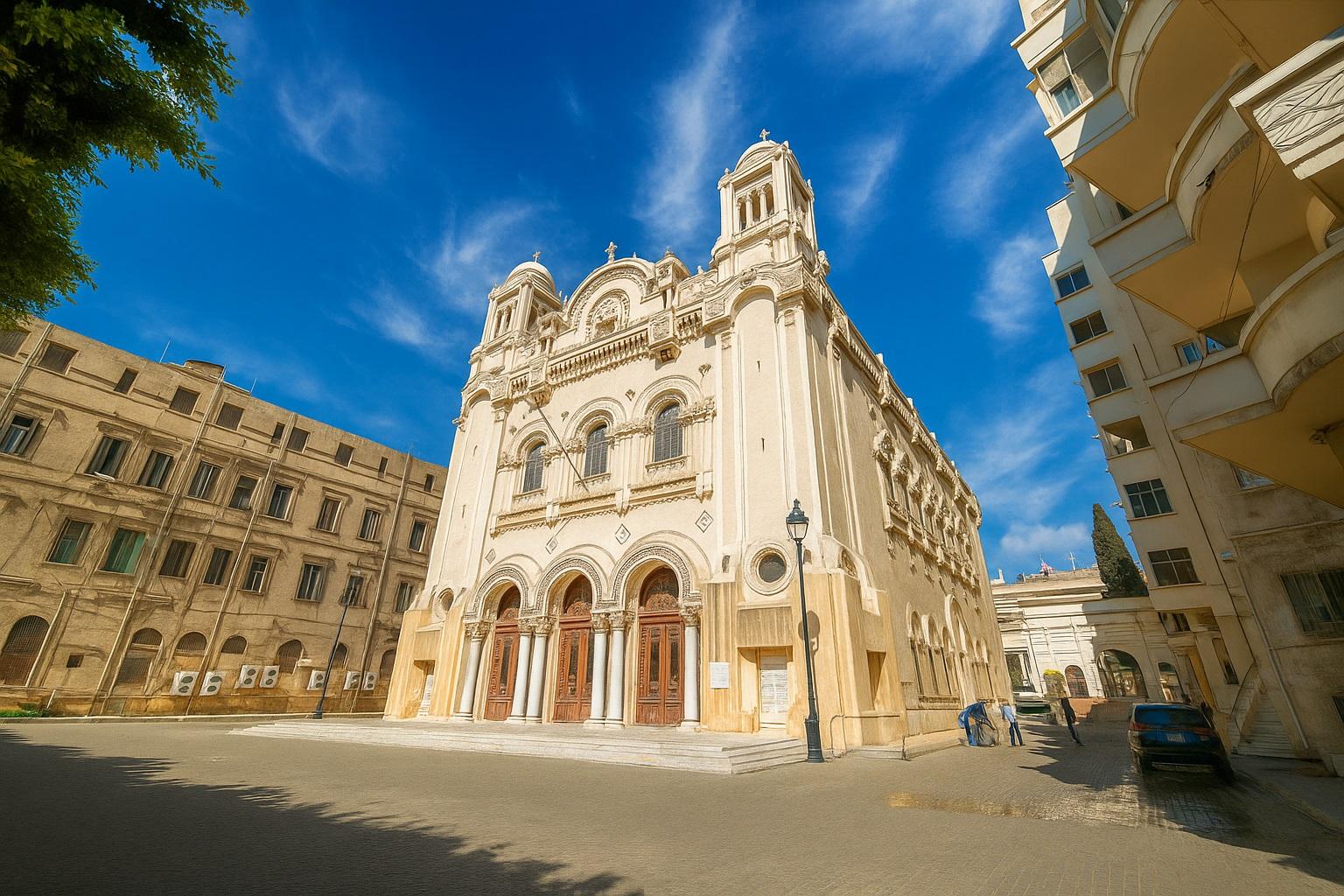
The Cathedral Church of the Annunciation of the Theotokos (Evangelismos) is the largest Greek Orthodox church still in use in Alexandria and a landmark of the city’s historic Greek quarter, beside the headquarters of the Greek Orthodox Patriarchate of Alexandria and All Africa. Its foundation stone was laid in 1847 and it was consecrated on 25 March 1856, to designs by the architect Ermetes Pierotis. Its present, richly decorated appearance dates from the embellishment works of 1929–1950.
The building
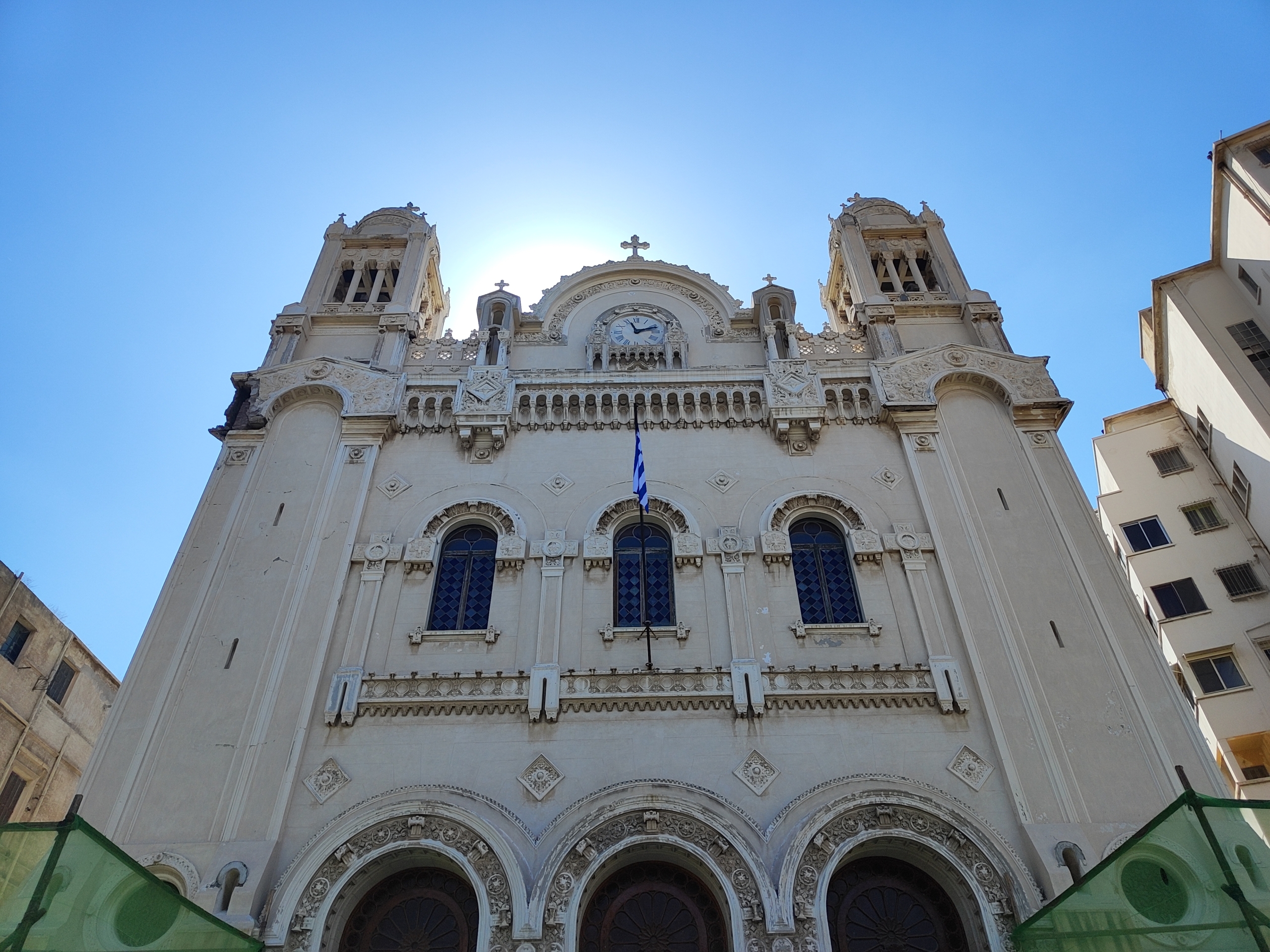
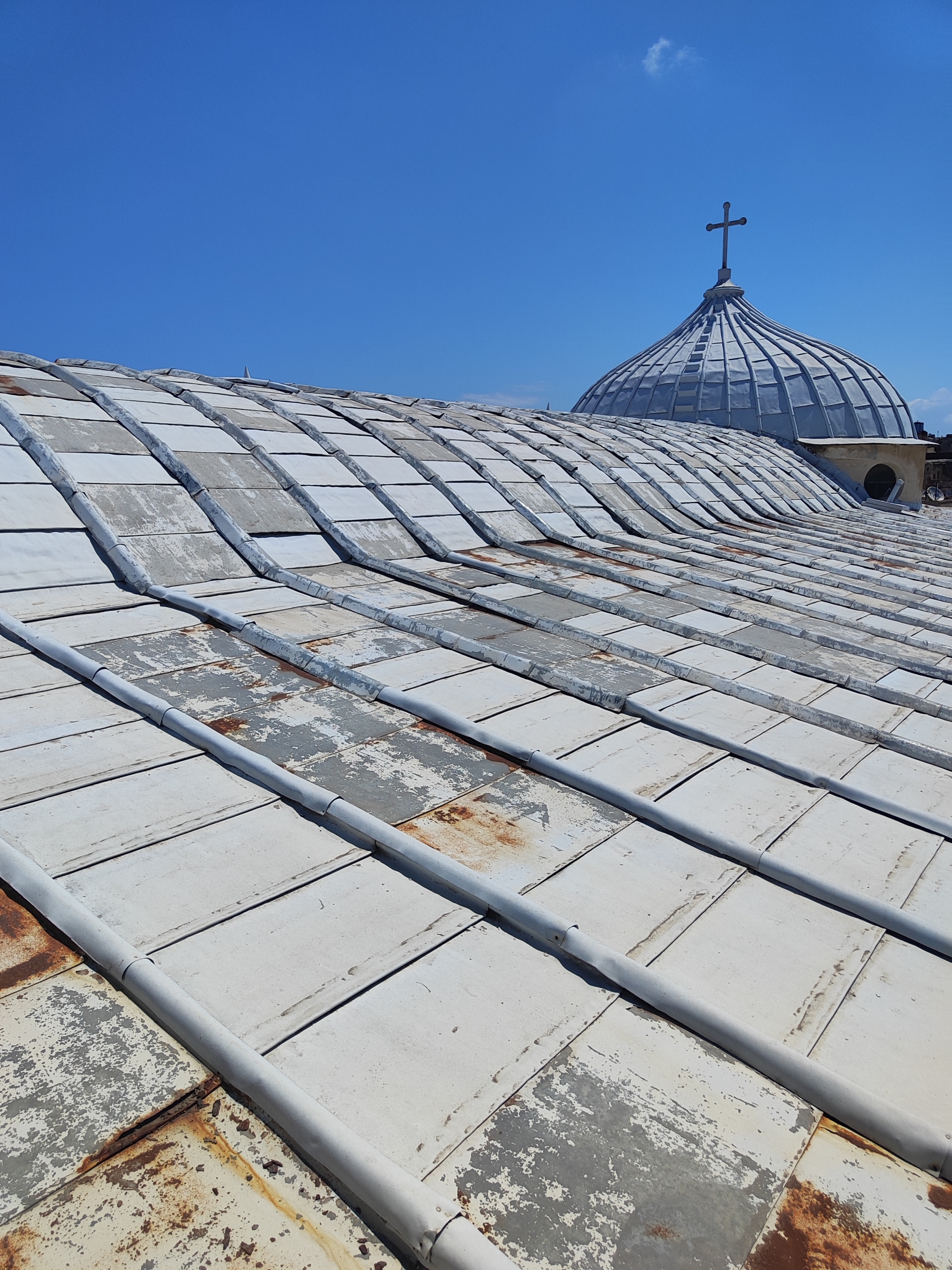
The church is a three-aisled basilica with a dome which, unusually, rises over the sanctuary rather than the centre of the nave. It measures about 40 × 24 m in plan and 23 m in height, with twin bell towers rising to 35 m. The walls are load-bearing stone masonry tied with steel ties; the pitched roof is carried on timber trusses and covered with zinc-coated steel sheets, while the upper parts of the bell towers are of reinforced concrete.
Assessment
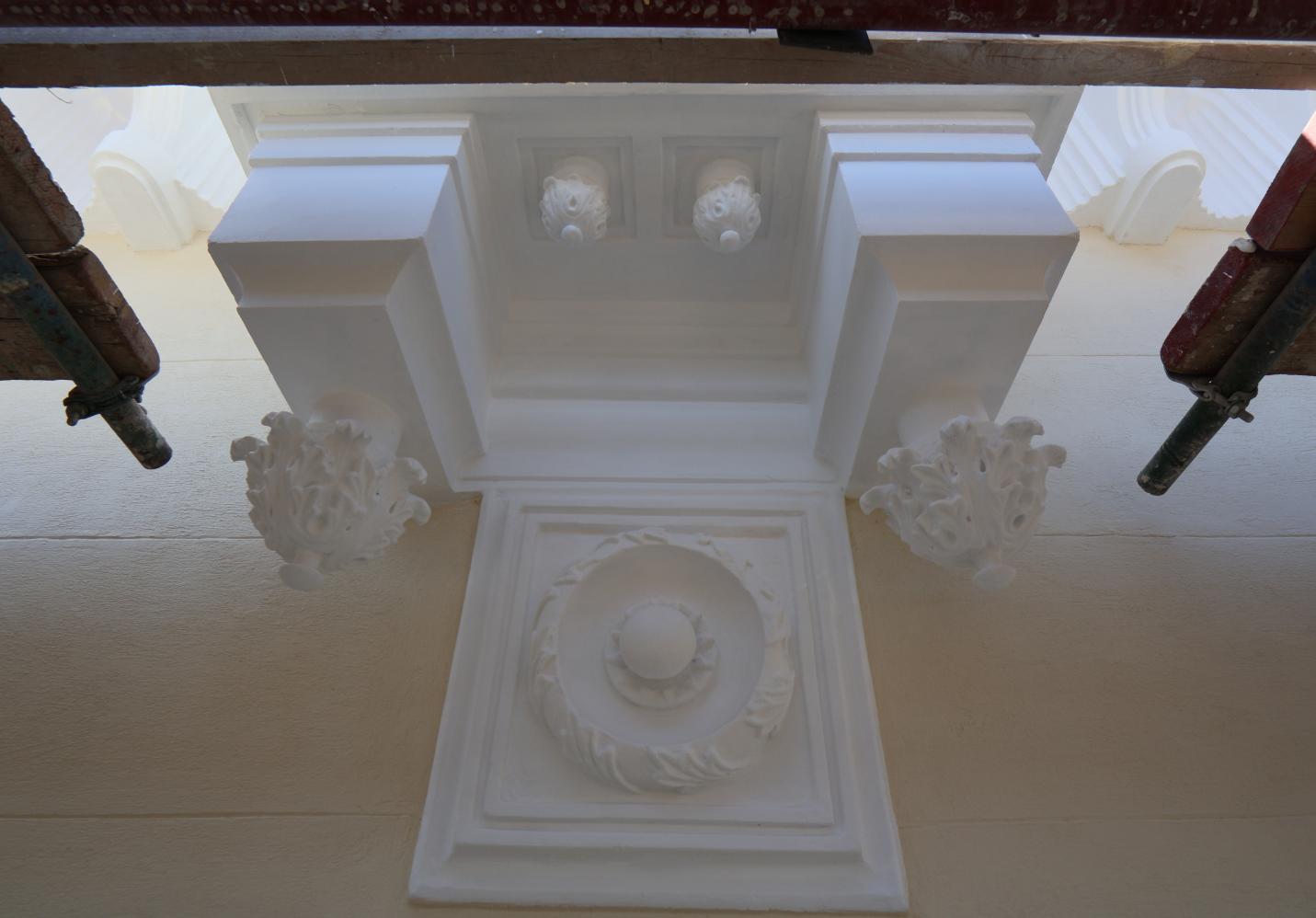
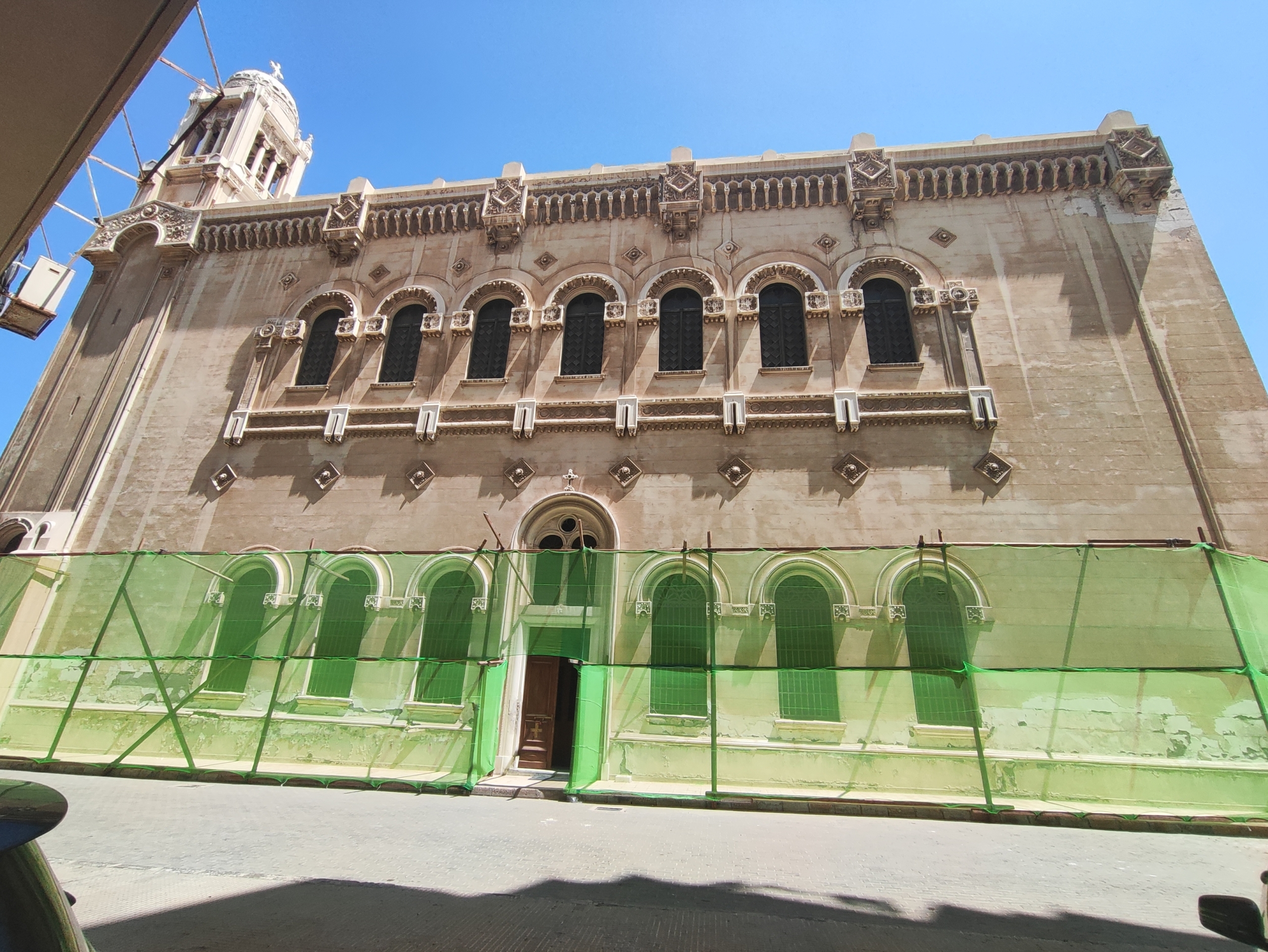
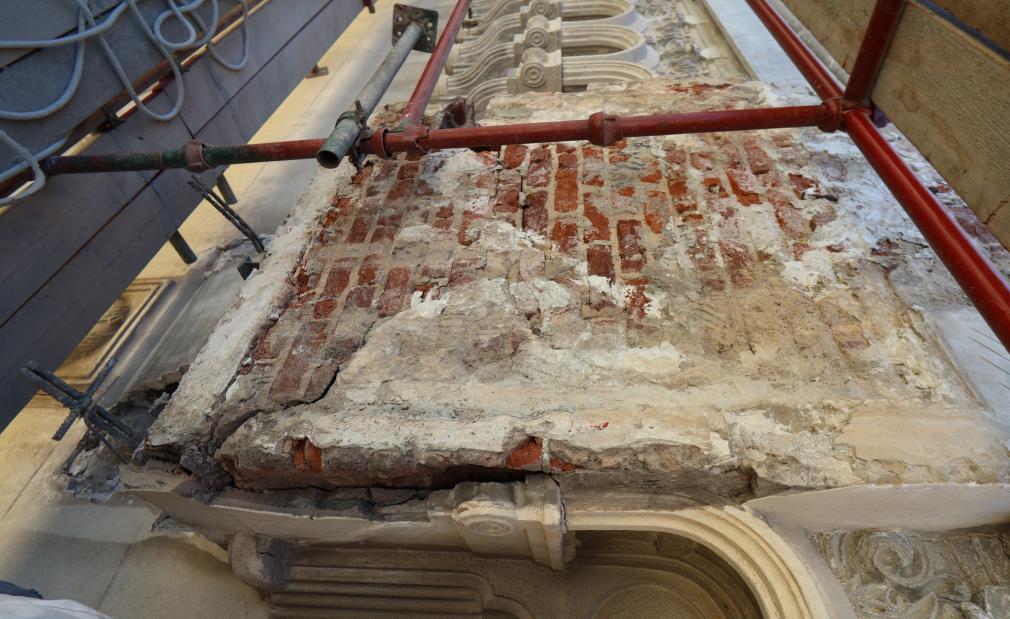
Penelis Consulting Engineers inspected the cathedral in 2023 and prepared the restoration study. The structural strengthening carried out in 2002–2004 was found to have performed well, with no signs of structural distress. The façade decoration, however, had failed: the large cement-mortar medallions had cracked over corroding iron frames and fragments were falling into the courtyard, creating a serious safety risk. Rising damp affected the lower walls and the perimeter cornice up to window-sill level, and about 20–25% of the roof sheeting had deteriorated, causing leaks.
Restoration works
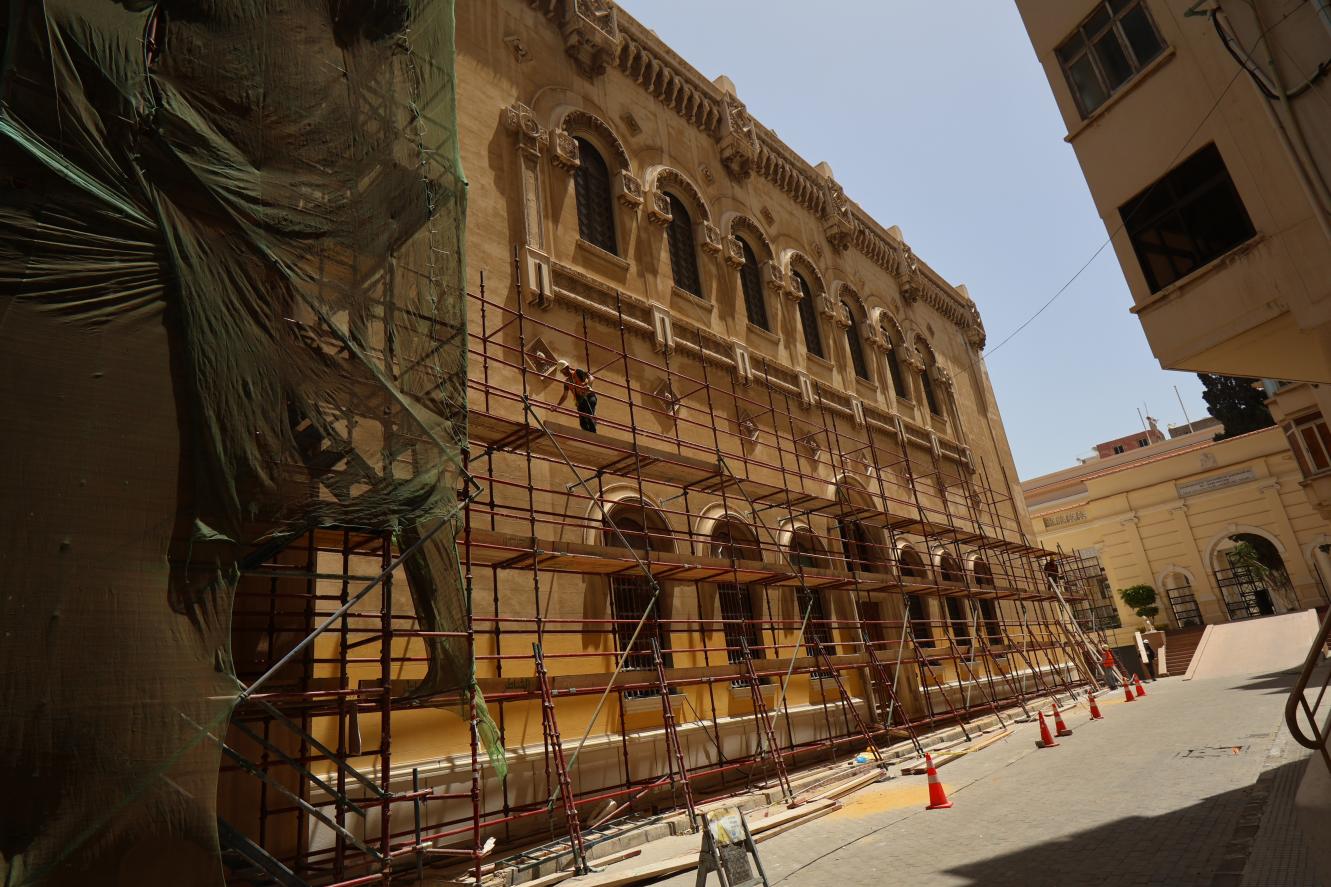
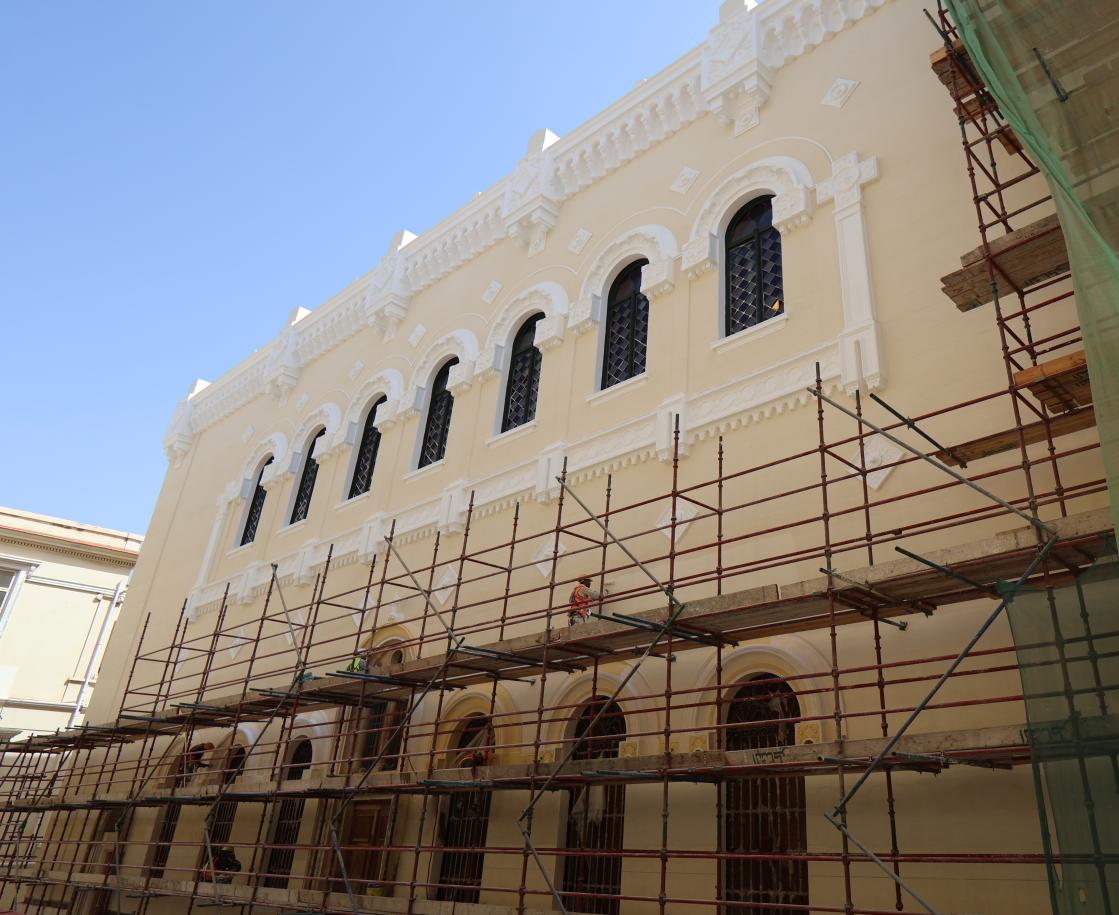
Instead of stripping the façades back to their simpler 19th-century form, the study recommended keeping the façades as the city knows them and renewing only what had failed:
- removal of the failed medallions, cornices and sills, and replacement with moulded copies in white glass-fibre reinforced concrete (GRC) and, for the large medallions, glass-fibre reinforced plastic (GRP), on stainless-steel frames and chemical anchors (galvanised or painted steel was not permitted);
- removal of the render on the lower façade, sandblasting and repointing of the stonework so the masonry can breathe, and a new GRC perimeter cornice;
- a perimeter French drain with pumped sumps connected to the rainwater network;
- replacement of the failed roof sheets and perimeter waterproofing;
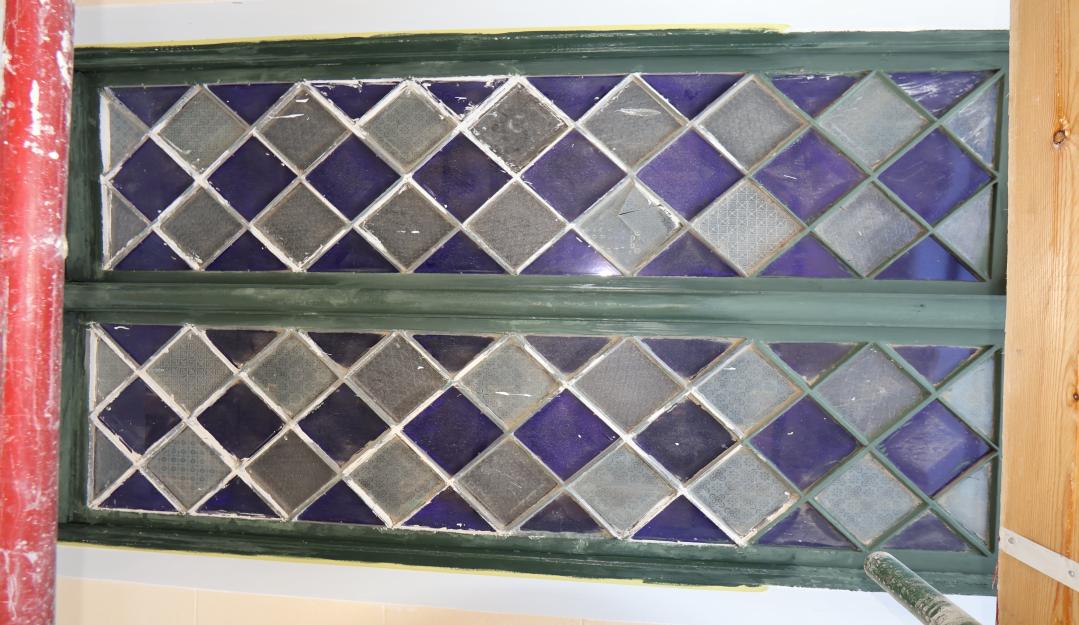
- conservation of the wooden doors, stained-glass windows and decorative ironwork, and repainting of the façades.
The works are funded by the Athanasios and Marina Martinos Foundation and carried out by ROWAD Modern Engineering under an NEC4 contract, with works starting in 2025. Penelis acts as Project Manager and the client’s representative, reviewing method statements, materials, shop drawings and GRC/GRP test results, and supervising the works on site.
The cathedral before the works (2023 survey)
Restoration in progress